IN A WORLD OF SHORTCUTS, WE DON'T™



Designing Safe Robotic Cells Using Machine Guard Fencing
Industrial automation has rapidly evolved after the advent of robotic cells. These high-performing workstations have also transformed the way manufacturing and assembly processes are completed. However, robotic cells do come with a set of safety challenges. While this technology improves precision, consistency, and production speed, it can create hazards if not carefully monitored.

Robotic systems involve high-force, fast, and repetitive movements that can cause serious injuries to nearby workers if the work zone isn’t properly protected. OSHA also recommends safeguarding workers by placing machine guarding systems around equipment that may cause workplace injury. That’s why it’s worth designing safe robotic cells using machine guard fencing.
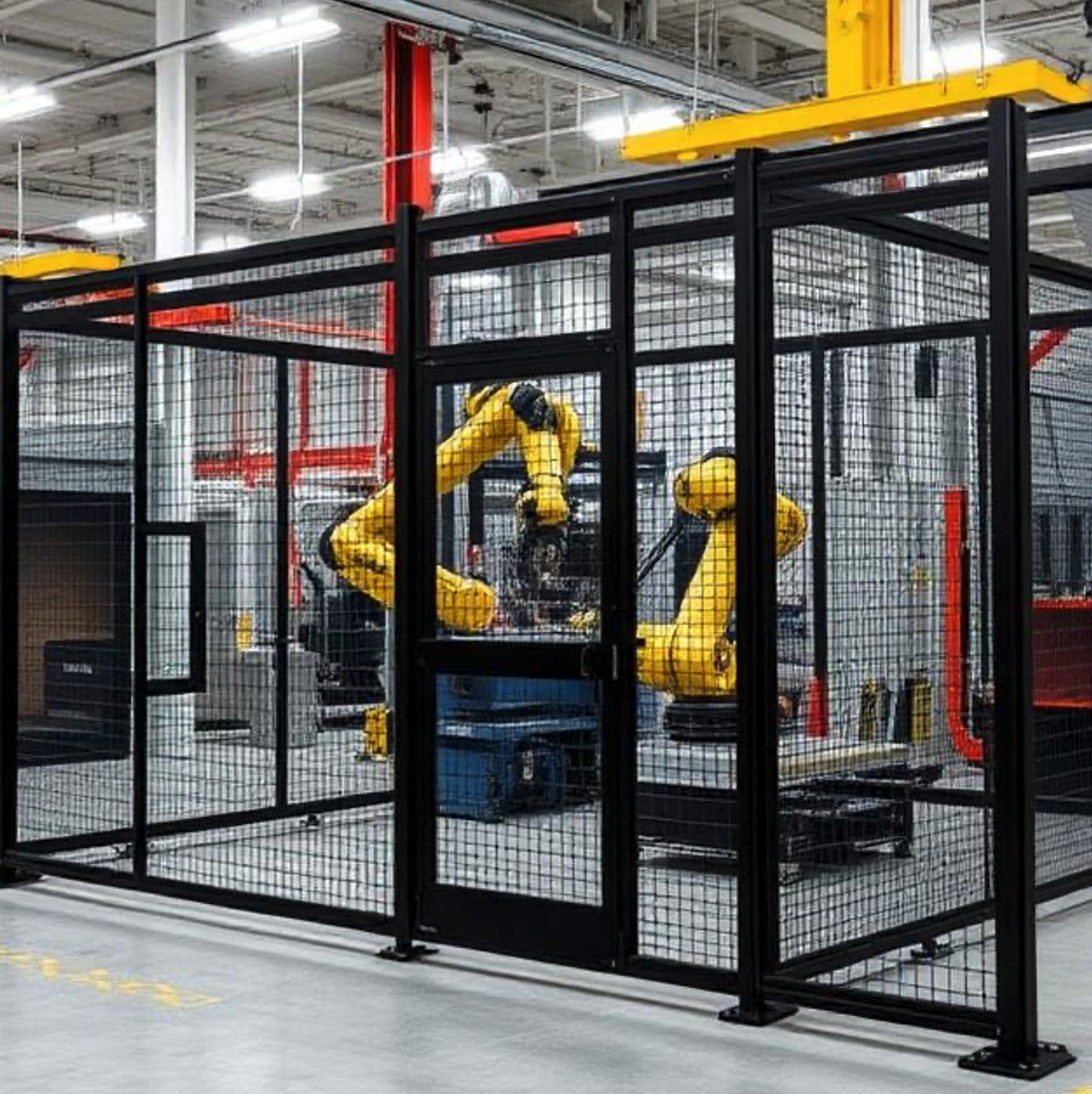
If designed correctly, a high-quality machine guarding fence acts as a safety boundary around robotic equipment without compromising productivity, visibility, and accessibility of a robotic cell.
Since designing safe robotic cells is a high-involvement task, it’s wise to consider several points before moving forward. In this guide, we’ll explore all of those in detail.
Important Factors to Consider When Designing a Machine Guard Fencing Layout
Designing safe robotic cells isn’t about covering the automated machinery with just any physical barrier. In industrial environments, each robotic cell has unique movement patterns, space limitations, operational hazards, and access needs. That’s why each fencing layout should be customized accordingly. Industrial safety fencing must create a smarter and more functional work zone.
Before planning where openings, fence panels, and access gates should go, it’s essential to focus on the following design considerations:
Robot’s range of motion
Robotic arms may rotate, swing, pivot, and extend beyond their visible base. This may happen during various programmed cycles. A machine guarding fence that covers a robotic cell’s immediate operating space can be too close to nearby equipment, workers, and traffic lanes. Therefore, the machine guard fencing layout should be designed beyond the resting position of a robotic system.
Instead of enveloping the robotic cell according to the floor space it covers, it’s wise to customize the machine guarding fence in a way that its layout should include some extra space depending on arm extension throughout active cycles, swing radius, horizontal and vertical travel paths, and movement of the robotic system during startup, error recovery, and shutdown.
End-of-arm tooling hazards
It’s not uncommon in automotive, food processing, electronics, and other industries to boost production efficiency by automating workflows as much as possible. That’s why many businesses prefer speeding up manufacturing processes by using robotic systems with end-of-arm tools. These tools are specialized devices that are attached to a robot’s arm.
While end-of-arm tooling greatly increases productivity, it also dramatically increases injury risk, especially if the tools attached to a robot’s arm rotate, cut, weld, grip, or extend beyond a specific space during operation. Some examples of such tools include clamping devices, trimming tools, suction systems, sharp processing tools, rotating cutters, and weld guns.
To completely prevent potential hazards from tooling, design the machine fence guarding layout after reviewing how far the end-of-arm tool of a robot extends. If the perimeter is measured beforehand, it becomes easier to get the right custom size of a machine guard fence.
Material flow
Material flow is a highly practical yet often overlooked factor while designing a machine guard fence layout. An ideal machine guard fence should allow workers to easily move raw materials, pallets, parts, and finished products while entering and exiting a robotic cell during machine operations. If smooth movement of materials isn’t possible, it can result in awkward loading or unloading zones, limited forklift access, bottlenecks around openings and gates, and cramped transfer of materials.
Before customizing an industrial safety fencing layout, it’s essential to review the size of all materials that are used in the robotic applications, and then, get a machine guarding fence that properly facilitates the ongoing movement of materials. The smooth material flow will also ensure that the workers aren’t leaving the gates of a machine guarding fence open.
Work traffic routes
In large industrial environments, robotic applications do not work in isolation. While the operations are based on automated processes, workers are still required to walk into large robotic work zones to monitor equipment and transport materials. Therefore, it’s essential to consider the traffic paths of workers who are actively involved in monitoring the robotic cells.
If designed according to workers’ traffic routes, machine guard fencing can prevent congested walkways around robotic systems. The fencing layout should also reflect where supervisors monitor production, where machine operators usually stand, and where maintenance personnel do their job. If pallet traffic, forklifts, and carts move near robotic cells, the placement of a machine guard fence shouldn’t hinder traffic routes.
Accessibility for emergency stops
Just like other heavy machinery, a robotic system can behave unexpectedly. That’s why workers must always have access to the emergency stop option or a shutoff button if a robotic application suddenly malfunctions or jams. A well-planned machine guard fence can make emergency controls easier to reach.
So, ensure that operators and other workers can get immediate access to emergency stops. Also, check if they can reach the emergency control panels quickly, even under pressure.
Sightlines
Visibility is another crucial factor when selecting a robotic guard fencing system. A machine guard fence should be one that supervisors, maintenance teams, and operators can see through a robotic cell without entering it. With clear sightlines, personnel can also monitor robotic cycles even while standing outside the fence. Besides, they can spot irregular motion or jams immediately without opening the access points.
To improve sightlines, go for industrial safety fencing options that comprise see-through panels. Steel mesh panels can be especially effective as they preserve visibility while also protecting workers from the hazards of robotic equipment.
Gate placement
Gate placement directly affects the efficacy of machine guard fencing. That’s why a machine guard fence can have one, two, or even multiple gates (depending on the cell size, operator needs, material handling needs, maintenance needs, safety planning, and equipment layout). Each gate should serve a specific purpose. The key is to make sure that each gate supports the controlled movement of workers and materials.
Hinged gates are incorporated in machine guard fencing for access entry of routine operators. Machine guarding fences with sliding gates are practical for robotic cells that are nearby forklift traffic. Wide gates are required for maintenance personnel. In restricted work zones, controlled-access gates can limit unnecessary entry and only specific employees are allowed to enter through these gates.
The trick is to identify the gate option that matches specific operations of your robotic systems the most, and configure a gate for your machine guard fence accordingly.
The Takeaway
When it’s about improving industrial operations using robotic cells, a properly configured machine guarding fence can make all the difference. Besides preventing workers from hazardous zones, these protective barriers help minimize unsafe shortcuts and accidental entries. However, what matters most is designing a guard fencing system that aligns well with the specific parameters of each robotic cell.
Modular machine guarding fences can easily fit specific layouts of robotic systems. Now that you’re aware of the important considerations to take before designing a machine guarding fence for a robotic cell, you can customize the machine guard fencing system that also matches future adjustments, layout changes, and expansions.
Recent Posts
- Designing Safe Robotic Cells Using Machine Guard Fencing
- Sound Enclosures vs. Active Noise Control Technology (ANC): Which Works in Industrial Settings?
- When Industrial Curtain Walls Fail — Real-World Failure Modes & How to Design Them to Prevent Costly Incidents
- Softwall vs Hardwall Insulation Barriers: Pros, Cons, and ROI Breakdown
- ‘Clean Zone’ or ‘Cross-Contamination Nightmare’? How to Tell If Your Warehouse Passes the Test
- The Silent Safety Hero: Why Fixed Draft Curtains Are Required in High-Rack Storage Facilities
- The Invisible Risk: How Contamination Happens Without Proper Warehouse Barriers
- Are Your Insulated Warehouse Curtains Compliant
- Understanding Noise Regulations – When Is a Temporary Noise Barrier Legally Required?
- 7 Powerful Ways Industrial Curtain Walls Boost Employee Productivity
Categories
- Accordion Fold Curtains
- Acoustic Baffles
- Agri-Shield Curtains
- Auto Body Shop Curtains
- Bio Plastics
- Draft & Smoke Curtains
- Industrial Divider Curtains
- Industrial Safety Products
- Insulated Curtain Walls
- Machine Guard Safety Fencing
- Mesh Curtain Screens
- News
- Outdoor Curtains
- PVC Strip Curtains
- Smoke & Draft Curtains
- Soundproof Noise Blocking Curtains
- Spray Paint Booth Curtains
- Tarps
- Thermal Curtains & Covers
- Uncategorized
- USDA Wash Down Curtain
- Warehouse Dividers
- Welding Blankets
- Welding Curtains
- Welding Screens