IN A WORLD OF SHORTCUTS, WE DON'T™



Blog
‘Clean Zone’ or ‘Cross-Contamination Nightmare’? How to Tell If Your Warehouse Passes the Test
How USDA Wash Down Curtains can Help Keep Your Facility in a Clean Zone
As you step into your warehouse, you might see sparkling floors, organized pallets, and efficient workflow. But beneath this orderly façade, it’s just impossible to see the invisible allergens, chemical residues, mold, and pathogens. The culprit? Cross-contamination.
The worst thing about cross-contamination is that it cannot be identified by the naked eye. Therefore, it has become challenging to figure out if your warehouse is a clean zone or a cross-contamination nightmare. That’s why even the slightest, unseen growth of bacteria in a clean warehouse can lead to product spoilage. This can erode business reputation overnight.
Physical segregation is the only solution to ensure your warehouse remains a clean zone rather than a breeding ground for cross-contamination. Installing wash down curtains is an effective way to make it possible. However, it’s crucial to measure the level of cleanliness of your warehouse in the first place so you can take necessary steps accordingly.
In this post, we’ll explain how to tell if your warehouse passes the self-assessment test, the role of food grade wash down curtains in eliminating any risks of cross-contamination, and how to ensure that your warehouse remains a clean zone.
The Self-Assessment Test That Every Warehouse Should Go Through
Conducting regular self-assessment tests can help facility managers evaluate the hygienic environment of a warehouse even before warehouse auditors come in for major inspections. These tests also contribute to identifying contamination risks that could lead to product spoilage, heavy fines, and business shutdowns (if not controlled right away).
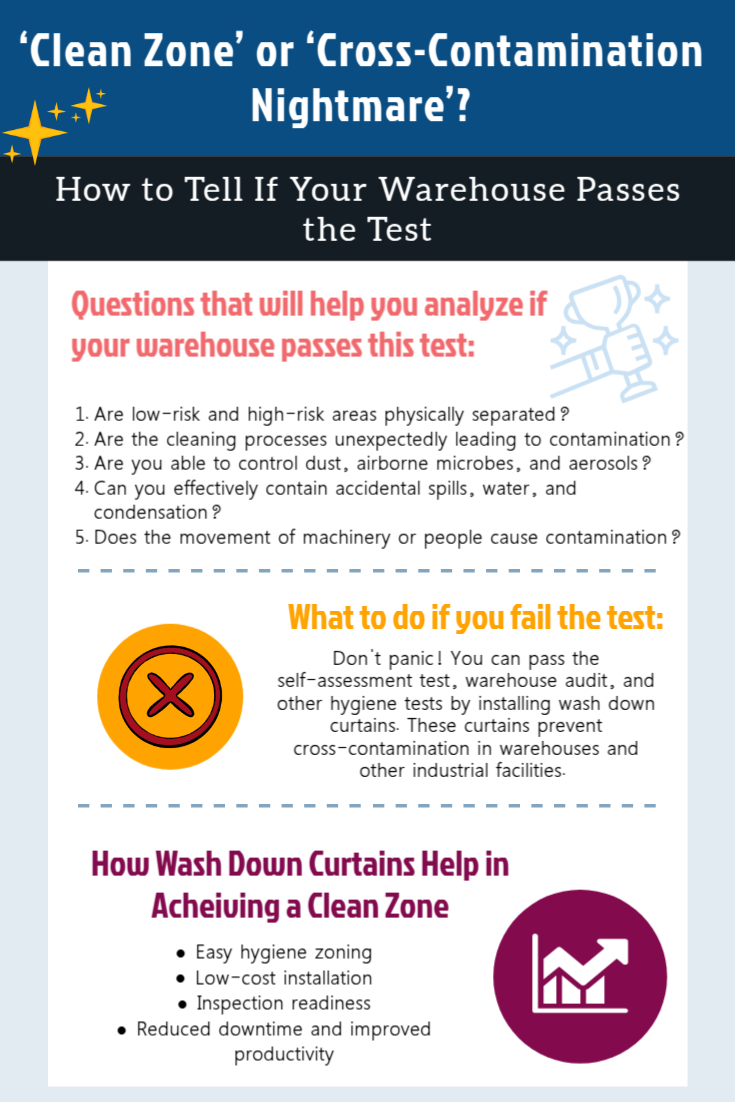
The following is a checklist of questions that will help you analyze if your warehouse passes this test. Each question requires you to either select “Passing Grade” or “Failing Grade.” You need to read the questions and assess if your warehouse falls under the “Passing Grade” or “Failing Grade” category.
Let’s have a look at each of these checklist questions:
1. The zoning test: Are low-risk and high-risk areas physically separated?
Passing Grade: Yes. Your warehouse is divided into defined, segregated zones that are also officially documented. Each zone (e.g. raw materials area, packaging area, storage area for finished goods, and chemical storage area) is separated from the other. Traffic flow is also restricted. Workers cannot move from dusty to clean zones without practicing specific sanitizing protocol.
Failing Grade: Zones do exist but they do not have a physical boundary. Pathways between the zones are also not defined. Forklifts unloading raw poultry can directly drive to the storage area where ready-to-eat goods are stored.
2. The cleaning test: Are the cleaning processes unexpectedly leading to contamination?
Passing Grade: No. The cleaning procedure is safe in itself because every storage area is segregated. The chemicals being released by pressure washing sprays do not spread to other zones where raw or packaged products are stored.
Failing Grade: Possibly, yes. Cleaning one storage area can easily contaminate another when there are no partitioning curtains. Chemical mist, soap residue, and even contaminated particles of water can spread in the air. These contaminants can settle on cleaned surfaces – thus, nullifying the actual purpose of cleaning.
3. The airflow test: Are you able to control dust, airborne microbes, and aerosols?
Passing Grade: Yes. Your ventilation systems push air out while preventing dust. You also check the air quality regularly. So, there are minimal chances of airborne microbes settling on sellable products.
Failing Grade: No. Whenever the warehouse door opens, the external wind brings in debris that contaminates the entire facility.
4. The moisture test: Can you effectively contain accidental spills, water, and condensation?
Passing Grade: Yes. You have an effective system for managing wet areas. You also have wash down curtains, floor drains, and spill kits to prevent water from migrating to other zones. This proactive strategy prevents moisture that could lead to contamination.
Failing Grade: No. Storage areas that are prone to accidental spills are not segregated. Therefore, water that was used to clean a specific area can easily penetrate dry storage areas. This results in bacteria and mold.
5. The machinery and personnel pathway test: Does the movement of machinery or people cause contamination?
Passing Grade: No. Pallet jacks, forklifts, and warehouse equipment are allocated for specific storage zones only. Those storage zones are also cleaned regularly. Before entering clean zones, personnel must follow a strict hygiene protocol to eliminate the risk of dust and debris that can be transferred through forklifts.
Failing Grade: Yes. The wheel of a forklift collecting dust from outdoors transfers the same bacteria onto sensitive products while rolling inside the warehouse. Since there’s no segregation between zones, workers moving freely from one storage zone to the other also transfer dust and debris via their footwear.
What to Do If You Fail the Test
USDA and other regulatory authorities have set specific standards for the operational compliance of warehouses. FSMA also requires environmental monitoring of human food. Therefore, it’s mandatory to achieve operational compliance by ensuring that there are zero chances for cross-contamination.
So, even if you have selected “Failing Grade” as the answer to most of the above-mentioned self-assessment questions, you don’t need to panic. The good news is you can pass the self-assessment test as well as the warehouse audit by just implementing a single, hygiene-based asset: wash down curtains.
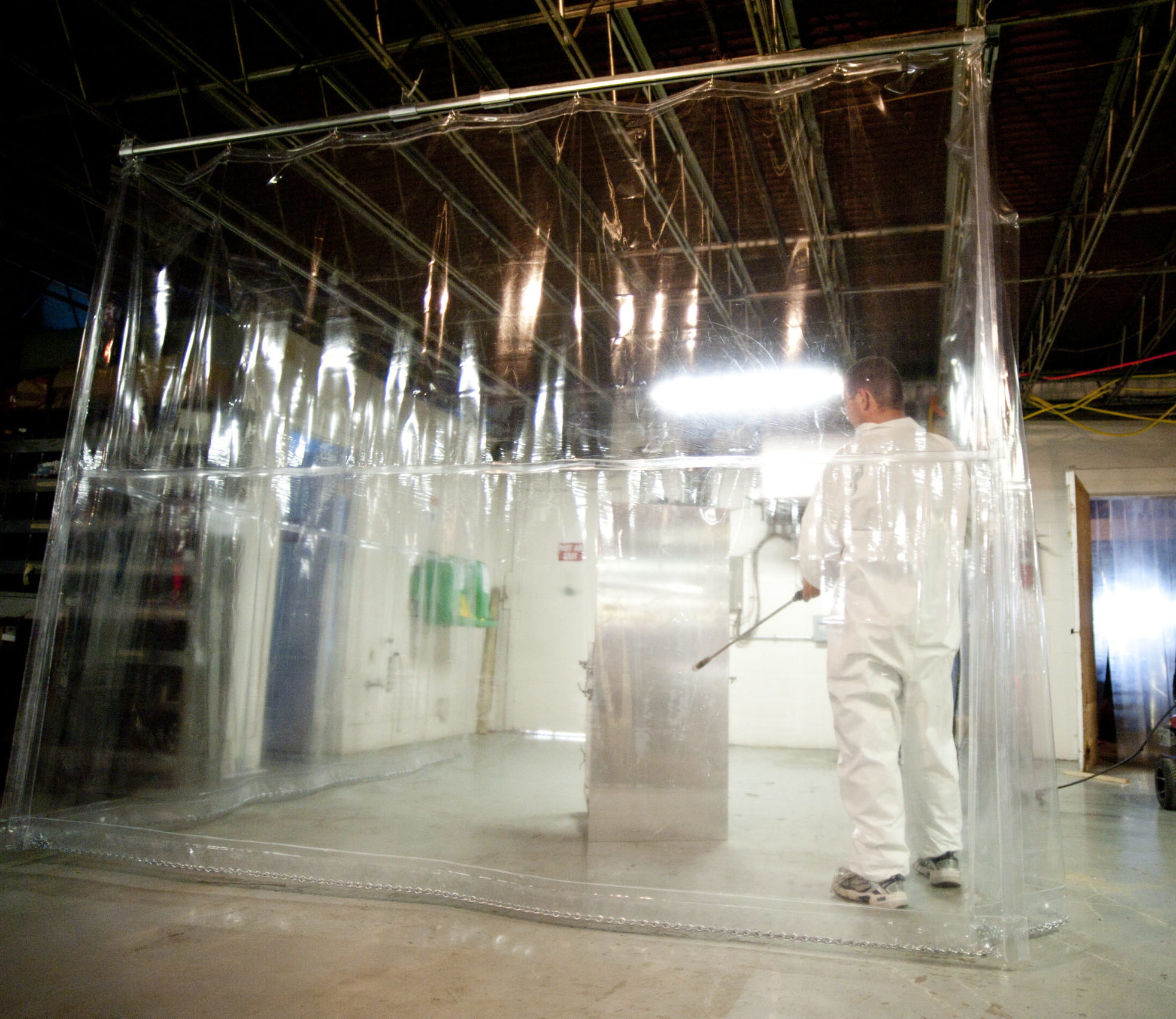
Made with flame-resistant PVC, wash down curtains are clear, waterproof, vinyl curtains that prevent cross-contamination in warehouses and other industrial facilities. Unlike permanent walls, they are often retractable and are useful in segregating one storage area from the other to prevent the spread of airborne particles, allergens, and bacteria during wash-down cycles.
The Role of Wash Down Curtains in Warehouses
Mounted on track systems, you can slide the wash down curtains open or closed (as required). These curtains are ideal for warehouses that require an effective partitioning system to prevent soap residue and foamy water from traveling to other clean zones.
The following reasons indicate why wash down curtains can be the best bet for keeping cross-contamination in warehouses away:
Hygiene zoning becomes easier: debris and dust cannot be transferred from wet zones to dry zones due to reliable segregation. Hygiene integrity is also easy to maintain because wash down curtains help streamline the traffic flow of workers.
Low-cost installation: while constructing fixed walls can be a labor-intensive and expensive partitioning process, wash down curtains act differently. Their low-cost and fast installation is what makes them worthwhile for warehouse managers.
Confirms inspection readiness: easy to clean, wash down curtains effectively resist harsh chemicals and moisture. That way, their level of inspection readiness directly complies with the sanitation standards of the USDA. The result is an inspection-ready, contamination-free warehouse.
Downtime can be reduced: the corrosion-resistant and smooth surfaces of wash down curtains allow quick cleaning. This helps reduce downtime and leads to a short cleaning cycle, reduced detergent and water usage, and productive warehousing operations.
How to Choose the Right Wash Down Curtains to Achieve a ‘Clean Zone’
Not all wash down curtains are the same. Therefore, you must select the ones that meet your expectations. Perfectly manufactured wash down curtains should offer the following features to keep cross-contamination at bay:
- Made of industrial-grade, durable material (such as PVC vinyl).
- Easy-to-wipe, non-porous design that can withstand pressure washing.
- Thermally welded seams that are not sewn (seamless wash down curtains eliminate the risk for bacterial growth).
- Robust installation hardware that includes sturdy brackets and stainless-steel or galvanized track systems to support the curtains’ weight.
The Takeaway
Installing wash down curtains that also optimize the effectiveness of wash-down cycles can be an asset for warehousing businesses. If you’re one of those warehouse managers who prefer to transform your warehouse into a clean zone that always passes all inspection tests, wash down curtains are the go-to option.
The key is to choose the ones that can easily withstand wear-and-tear, harsh cleaning chemicals, and frequent wash down sessions. If you prefer wash down curtains with specific requirements, a practical approach is to look for customizable wash down curtains that can be tailor-made according to your preferred size, fabric, and color. Once installed, your wash down curtains will not only pass the inspection test but will also ensure a clean, bacteria-free zone that will help flourish your business.
Recent Posts
- Designing Safe Robotic Cells Using Machine Guard Fencing
- Sound Enclosures vs. Active Noise Control Technology (ANC): Which Works in Industrial Settings?
- When Industrial Curtain Walls Fail — Real-World Failure Modes & How to Design Them to Prevent Costly Incidents
- Softwall vs Hardwall Insulation Barriers: Pros, Cons, and ROI Breakdown
- ‘Clean Zone’ or ‘Cross-Contamination Nightmare’? How to Tell If Your Warehouse Passes the Test
- The Silent Safety Hero: Why Fixed Draft Curtains Are Required in High-Rack Storage Facilities
- The Invisible Risk: How Contamination Happens Without Proper Warehouse Barriers
- Are Your Insulated Warehouse Curtains Compliant
- Understanding Noise Regulations – When Is a Temporary Noise Barrier Legally Required?
- 7 Powerful Ways Industrial Curtain Walls Boost Employee Productivity
Categories
- Accordion Fold Curtains
- Acoustic Baffles
- Agri-Shield Curtains
- Auto Body Shop Curtains
- Bio Plastics
- Draft & Smoke Curtains
- Industrial Divider Curtains
- Industrial Safety Products
- Insulated Curtain Walls
- Machine Guard Safety Fencing
- Mesh Curtain Screens
- News
- Outdoor Curtains
- PVC Strip Curtains
- Smoke & Draft Curtains
- Soundproof Noise Blocking Curtains
- Spray Paint Booth Curtains
- Tarps
- Thermal Curtains & Covers
- Uncategorized
- USDA Wash Down Curtain
- Warehouse Dividers
- Welding Blankets
- Welding Curtains
- Welding Screens