IN A WORLD OF SHORTCUTS, WE DON'T™



Insulated Curtain Wall Systems for Warehouses and Industrial Facilities


Insulated curtain wall systems provide an effective solution for temperature control, energy efficiency, and space separation inside warehouses, manufacturing plants, and industrial facilities. These systems are widely used as industrial warehouse curtains and insulated warehouse curtains to create controlled environments and improve operational efficiency.
Steel Guard Safety insulated curtain walls are engineered for facilities that require climate separation, including cold storage environments, refrigerated areas, and temperature-controlled production zones. These systems also function as industrial thermal curtains, helping maintain consistent temperatures between work zones.
Insulated curtain systems are commonly used in distribution centers, food processing facilities, cold storage warehouses, and industrial environments where temperature control is critical.
Insulated curtain wall systems are often used as part of broader facility safety and efficiency strategies aligned with
workplace safety guidelines.
What Are Insulated Curtain Walls?
Insulated curtain walls are multi-layer fabric systems designed to provide thermal separation between different areas of a facility. These systems help reduce energy loss while maintaining controlled environments for storage, processing, or manufacturing operations.
Unlike rigid insulated walls, curtain systems provide flexibility, allowing facilities to adjust layouts as operational needs change. This flexibility makes them ideal for use as both industrial warehouse curtains and insulated warehouse curtain systems.
Industrial Warehouse Curtains for Facility Separation
Industrial warehouse curtains are used to divide large spaces into functional zones while maintaining environmental control. These curtain systems are commonly installed in warehouses and distribution centers to separate work areas, reduce contamination risk, and improve workflow efficiency.
As insulated warehouse curtains, these systems provide both space separation and temperature control, making them ideal for facilities that need to manage multiple operational zones within the same building.
Industrial Thermal Curtains for Temperature Control
Industrial thermal curtains are designed to maintain consistent temperatures within industrial environments. These systems help reduce heat loss, contain cooled air, and improve overall energy efficiency in facilities such as cold storage warehouses and manufacturing plants.
By functioning as insulated curtain walls, thermal curtain systems allow facilities to create temperature-controlled zones without the cost and permanence of traditional construction.
Insulated Warehouse Curtains and Energy Efficiency
Insulated warehouse curtains are engineered with multi-layer materials that provide thermal resistance and reduce energy loss. These systems help facilities lower heating and cooling costs while maintaining stable indoor environments.
Facilities using insulated curtain walls often experience improved energy efficiency, reduced operational costs, and greater flexibility in managing space and temperature zones.
Key Features of Insulated Curtain Systems
- Multi-layer insulated curtain construction
- Thermal barrier for temperature separation
- Custom sizing for warehouse and facility layouts
- Flexible installation and modular design
- Durable industrial-grade materials
- Options for track-mounted or fixed systems
Download our Revit BIM files for easy integration into your Insulated Curtain Wall Project
 Open Revit Library
Additional Information:
Insulated Curtain Walls vs Traditional Insulated Walls
| Feature | Insulated Curtain Walls | Traditional Insulated Walls |
|---|---|---|
| Installation Time | Fast installation | Extended construction time |
| Flexibility | Movable and adjustable | Permanent structure |
| Energy Efficiency | Thermal separation with flexible layout | Fixed thermal insulation |
| Cost | Lower cost solution | Higher construction cost |

Warehouse and Industrial Curtain Solutions
Insulated curtain materials are commonly manufactured with flame-retardant properties that may meet standards such as
NFPA 701 flame resistance testing.
Steel Guard Safety offers a complete range of
warehouse curtain systems and
industrial curtain systems designed for flexible space separation and environmental control.
Insulated Warehouse Curtains for Large Facility Applications
Insulated warehouse curtains are designed to divide large industrial spaces into controlled zones while maintaining temperature separation. These systems are widely used in warehouses and distribution centers to improve workflow, reduce energy costs, and create efficient operational areas.
As a form of industrial warehouse curtains, insulated curtain walls provide a flexible solution for facilities that require both space separation and environmental control without permanent construction.
Thermal Performance and Insulation Benefits
Industrial thermal curtains are constructed using multi-layer insulated materials designed to reduce heat transfer between zones. These systems help maintain stable temperatures in both heated and cooled environments, making them ideal for cold storage and temperature-sensitive operations.
Insulated curtain walls can significantly reduce energy consumption by minimizing air exchange between spaces, improving HVAC efficiency and lowering operational costs.
Energy Shield Insulated Curtains


Energy Shield Insulated Material
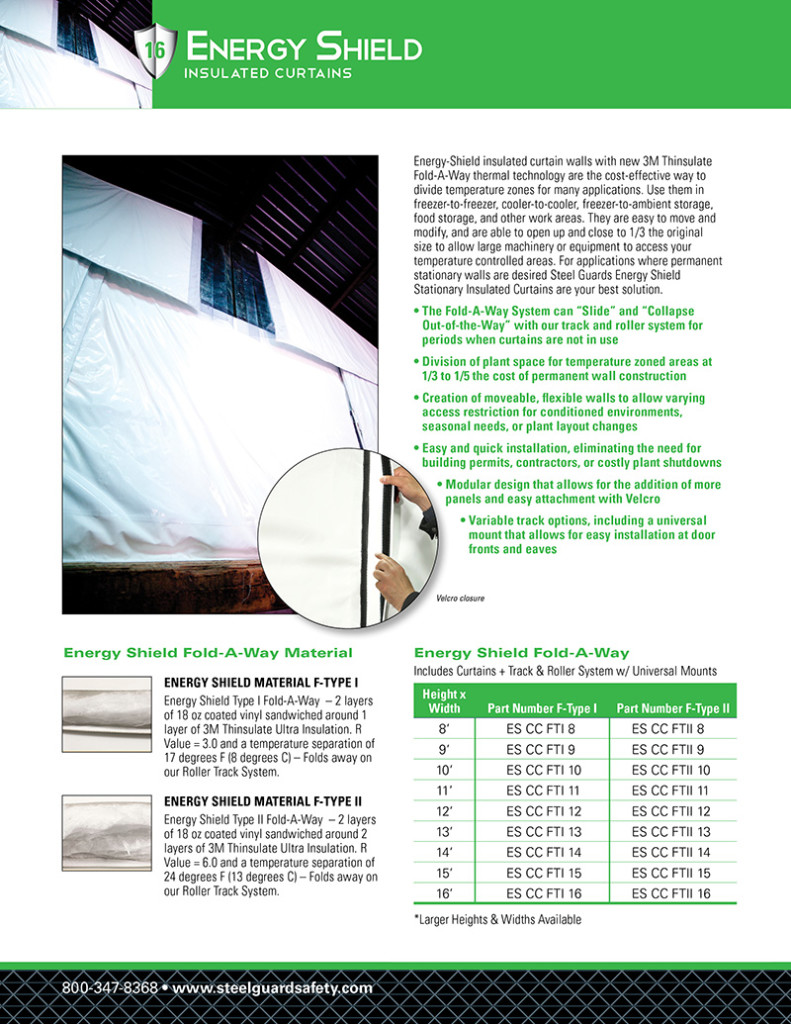
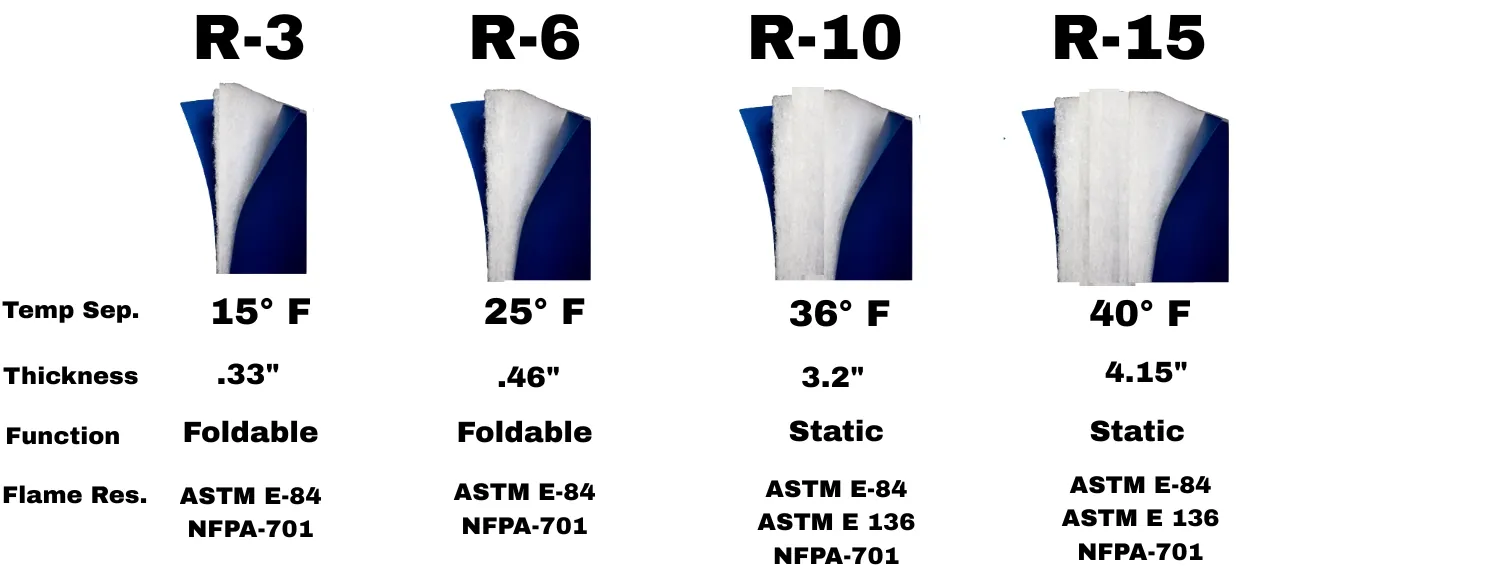
Energy Shield Materials – 2 layers of 18 oz coated vinyl sandwiched around 1, 2, or 4 Layers of 3M Thinsulate or Formaldehyde Free Fiberglass Insulation Ranging from 3″-6″ Thick with Foil Lamination. Meets Strict Building Codes including ASTM E 136 and NAIMA 202-96. R Values Range from R-3, R-6, for Thinsulate R-10, and R-15 for High R-Value Fiberglass. Custom configurations can reach up to R-30. All Materials meet NFPA-701 and ATM E-84 guidelines for Flame Retardancy in Buildings. See Materials Tab for More Details.

#2 Brass Grommets
#2 Brass Toothed Grommets are spaced every 12″ on center. The curtains can be affixed directly to rafters, or use a Universal L-Channel to affix Panels.

Velcro Side Attachments
2 inch Velcro side attachments are on both sides of the curtain panel to easily seal and attach both sides to multiple curtains to create an infinite length wall.

Floor Sweeps (Add-On)
Velcro attaches to the full length of one run of curtains – Seals bottom of insulated curtain to the floor.

Strip Door Walk/Drive Through (Add-On)
A Vinyl Strip Door can be added for access of Workers or Forklift Traffic between rooms.

Floor Mounts (Add-On)
Floor Mount D-Rings – Included with strap and buckle. Fastens the curtain system to floor.
Part# CA 101

Angle Iron
Energy Shield - Thinsulate
18 oz coated Vinyl( 2-Layers) sandwiched around 3M Thinsulate insulation. Engineered to provide high R-Values with minimal thickness. Has the ability to be used on our roller track system and can fold up to 1/3 of its length. Multiple Layers of Insulation provide R-Value insulation ranging from R-3 and R-6 Variations. Custom multiple layered units available
For detailed thermal performance data and material specifications, download our
insulated curtain system thinsulate technical data sheet.
Energy Shield - High R-Value
18 oz coated Vinyl (2-Layers) sandwiched around Formaldehyde Free Fiberglass Insulation Ranging from 3″-6″ Thick with Foil Lamination. Meets Strict Building Codes including ASTM E 136 and NAIMA 202-96. R Values of R-10 and R-15, with Custom up to R-30
For detailed thermal performance data and material specifications, download our
insulated curtain system high R-Value technical data sheet.

Industrial warehouse curtains are used to divide large spaces, improve workflow, and create controlled environments within warehouses and industrial facilities.
Industrial thermal curtains help maintain temperature zones, reducing energy loss and lowering heating and cooling costs.
Insulated warehouse curtains are flexible systems used for space division, while insulated curtain walls provide more robust thermal separation across facility zones.
They are commonly used in cold storage warehouses, food processing facilities, manufacturing plants, and distribution centers.
Yes, they reduce energy loss by maintaining temperature-controlled zones within industrial environments.
They provide a flexible and cost-effective alternative, especially in facilities where layouts may change over time.
Industries such as food storage, logistics, manufacturing, cold chain distribution, and industrial processing commonly use insulated curtain wall systems.
Explore our full range of warehouse curtain systems designed for flexible facility separation.
Catalog Page - Energy Shield Insulated Curtains (1)
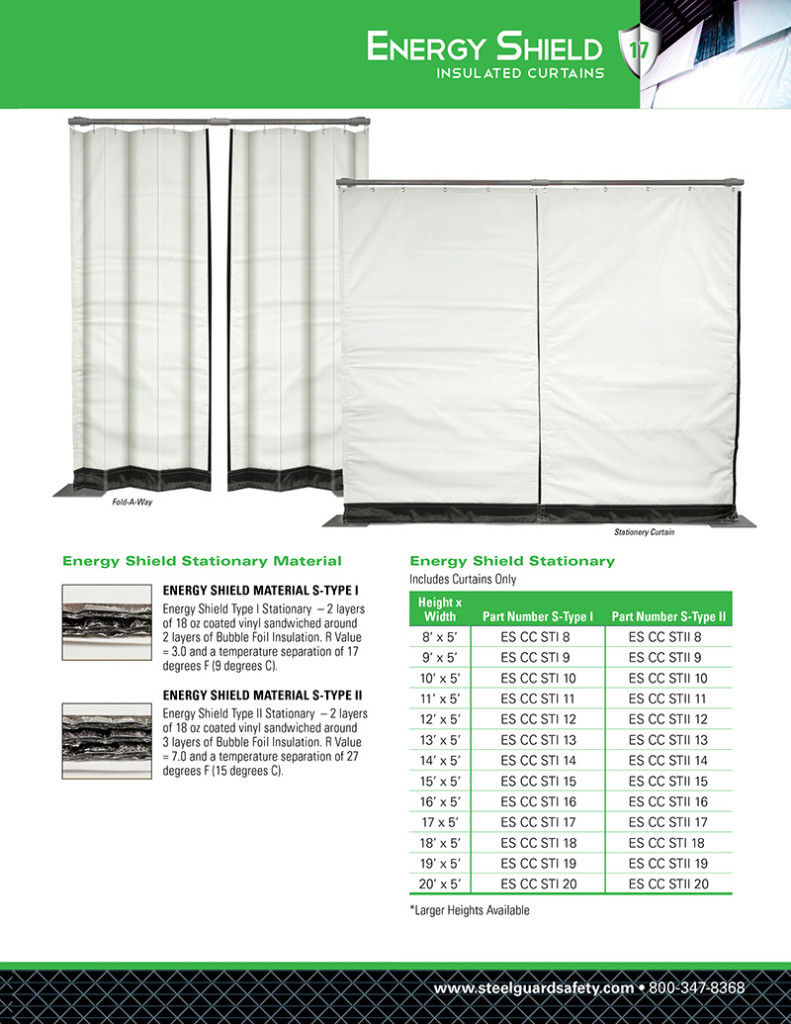
Catalog Page - Energy Shield Insulated Curtains (2)