IN A WORLD OF SHORTCUTS, WE DON'T™



High Temperature Curtains
Five Material Grades of Heat Shield Curtain, Matched to Your Operating Temperature and What the Curtain Has to Survive
High temperature curtains from Steel Guard Safety are solid panel barriers built to contain radiant and convective heat at ovens, furnaces, foundry aisles and hot work areas. Five material grades cover 500°F through 1900°F continuous, and every curtain is manufactured to your opening in South Holland, Illinois.
If product or personnel need to pass through the opening continuously, a panel curtain is the wrong format — see our High Temperature Strip Curtains instead. For the full range of heat barrier formats, see Industrial Heat Resistant Curtains.
Choose Your Material
These are not a simple ladder. Five grades cover different problems — surviving the heat, sending it back, keeping it out of a finish, or holding a temperature zone apart. Match the build to your failure mode, not just to your set point.
| Model | Material | Rating | Reflective | Insulated | Built For |
|---|---|---|---|---|---|
| HT-1000 | 24 oz acrylic treated fiberglass | 1000°F base fabric, intermittent | No | No | Sparks, spatter, abrasion. Economy grade, ANSI/FM 4950 approved |
| HT-2000 | PTFE coated fiberglass | 500°F continuous, 600°F intermittent | No | No | Coating lines and chemical exposure. No silicone to contaminate a finish |
| HT-3000 | 34 oz high silica cloth, single or double layer | 1900°F continuous, 3000°F melt | No | No | Heat treat furnaces, forge, foundry, molten splash. Our most specified grade |
| HT-4000 | High silica face, fiberglass needlemat core, aluminized fiberglass backing. Quilted | 1900°F continuous on the silica face; reflective backing 482°F, protected by the core | Yes | Yes | Severe radiant and conducted heat at furnace doors and operator stations. Static mount |
| HT-5000 | 32 oz silicone coated fiberglass both faces, fiberglass needlemat core. Quilted | 500°F continuous silicone face, 1000°F E-glass base fabric | No | Yes | Molten splash and holding temperature zones apart. Static mount |
Two of these are static mount only. HT-4000 and HT-5000 are quilted insulated builds, and the aluminized backing on HT-4000 is specified for fixed installations rather than tracked curtains that open and close repeatedly. If you need a curtain that rolls open several times a shift, HT-1000, HT-2000 and HT-3000 all track.
HT-4000 and HT-5000 are our two insulated builds, and they solve different problems. The HT-4000 puts silica toward the heat, an insulation core behind it, and a reflective backing on the cool side — the silica survives the heat, the core stops it conducting through, and the backing stays well inside its own limit. The HT-5000 drops the silica and the reflective layer for silicone faces that shed molten splash, with the same insulation core holding a temperature difference across the curtain.
Silica Is the Workhorse
The HT-3000 in high silica cloth is the grade we build most often, and it is the one to start with above 1000°F. Amorphous silica holds 1800°F continuous with a 3100°F melting point, which is a different material class from the coated fiberglass grades entirely — E-glass gives out around 1000°F no matter what coating sits on top of it.
We build it in single and double layer 36 oz construction, priced per linear foot of width at your specified height, sewn with stainless steel thread and grommeted every 12 inches across the top with reinforcement. Heights from 6 to 25 feet are standard and larger is available.
What Problem Are You Solving?
| If the problem is | Choose |
|---|---|
| Operating temperature above 1000°F | HT-3000 high silica |
| Molten metal splash | HT-3000 or HT-5000 |
| Radiant heat reaching the operator station | HT-4000 insulated reflective |
| Energy loss through an open doorway | HT-4000 insulated reflective |
| Fisheyes or craters in a cured finish | HT-2000 PTFE — contains no silicone |
| Chemical carryover between process stages | HT-2000 PTFE |
| Holding temperature zones apart | HT-5000 insulated |
| Holding zones apart at furnace temperatures | HT-4000 insulated reflective |
| General containment on a budget | HT-1000 acrylic treated |
Understanding the Ratings
Almost every temperature rating in this industry describes the base fabric rather than the finished curtain. A coated fabric is a substrate plus a coating, and they fail at very different temperatures — E-glass fiberglass holds to about 1000°F, but silicone stops at 500°F and PTFE decomposes around 660°F.
Steel Guard publishes the continuous rating of the limiting layer in each build and names which layer it is. We’ll send the manufacturer’s data sheet for any material on this page on request. If a curtain you’re comparing is advertised well above 1000°F, ask the supplier for the standalone maximum operating temperature of the coating, separate from the base fabric — a supplier who can answer that is worth buying from.
Construction
- Stainless steel thread throughout. Fiberglass thread caps at 1000°F and PTFE thread at 600°F — neither belongs on a high temperature curtain, and a thread failure drops a panel regardless of how the fabric is holding up.
- Grommets every 12 inches across the top with reinforcement, with optional chain bottom and track systems.
- Insulated builds quilted in 24-inch sections so the core stays evenly distributed when the curtain hangs.
- Built to any opening, with heights from 6 to 25 feet standard and larger available.
- Made in South Holland, Illinois in our own 17,000 sq ft facility. Family-run for 100 years.
Panel or Strip?
Panel curtains cover an opening or isolate an area and are moved aside or tracked open. Strip curtains are a passthrough — product and personnel move through them continuously without opening anything, which is why they suit conveyor lines and high-traffic oven doorways.
If a forklift, conveyor or operator passes through the opening all shift, you want strip curtains. If the opening is closed off or accessed occasionally, a panel is the better barrier.
Tell us the opening dimensions, your operating temperature and what the curtain has to survive besides heat. Call 1-800-347-8368 or request a quote online.
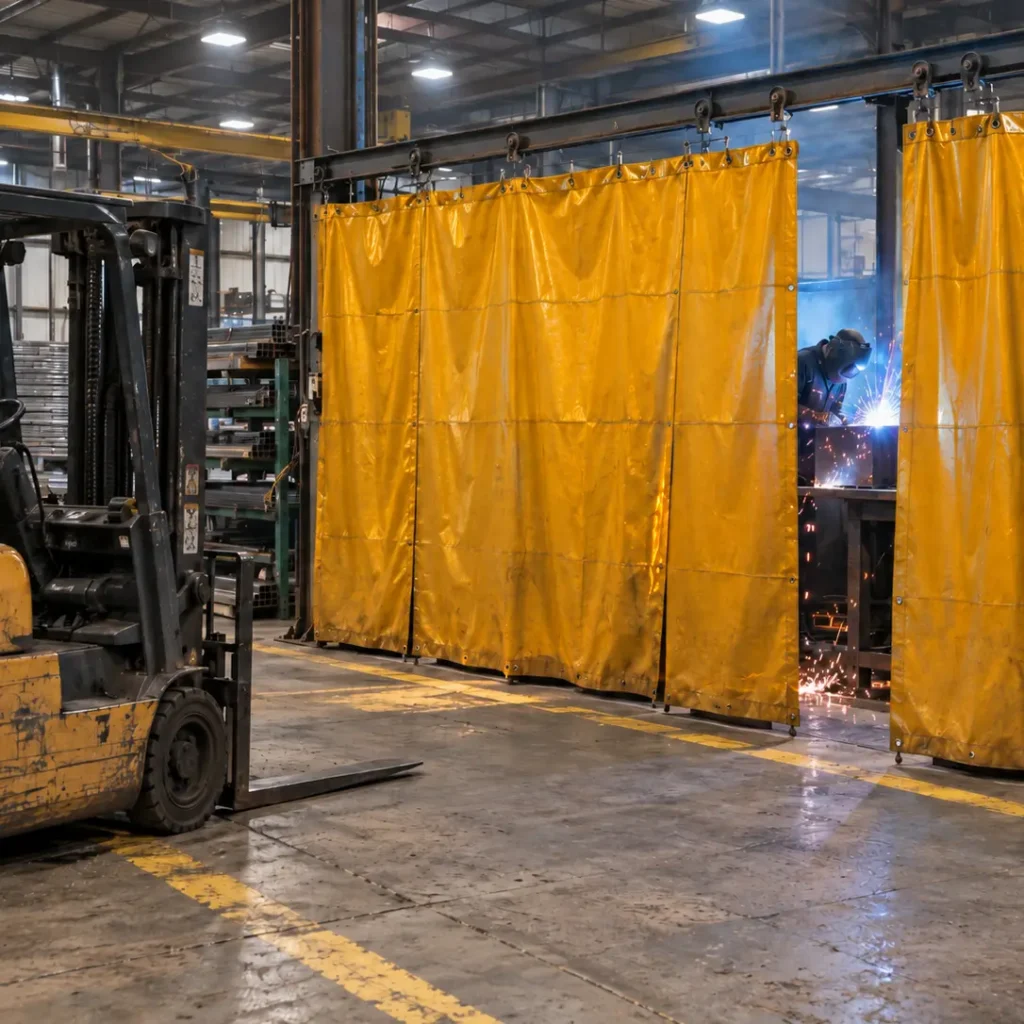
HT-1000 - Fiberglass Acrylic Coated Curtain
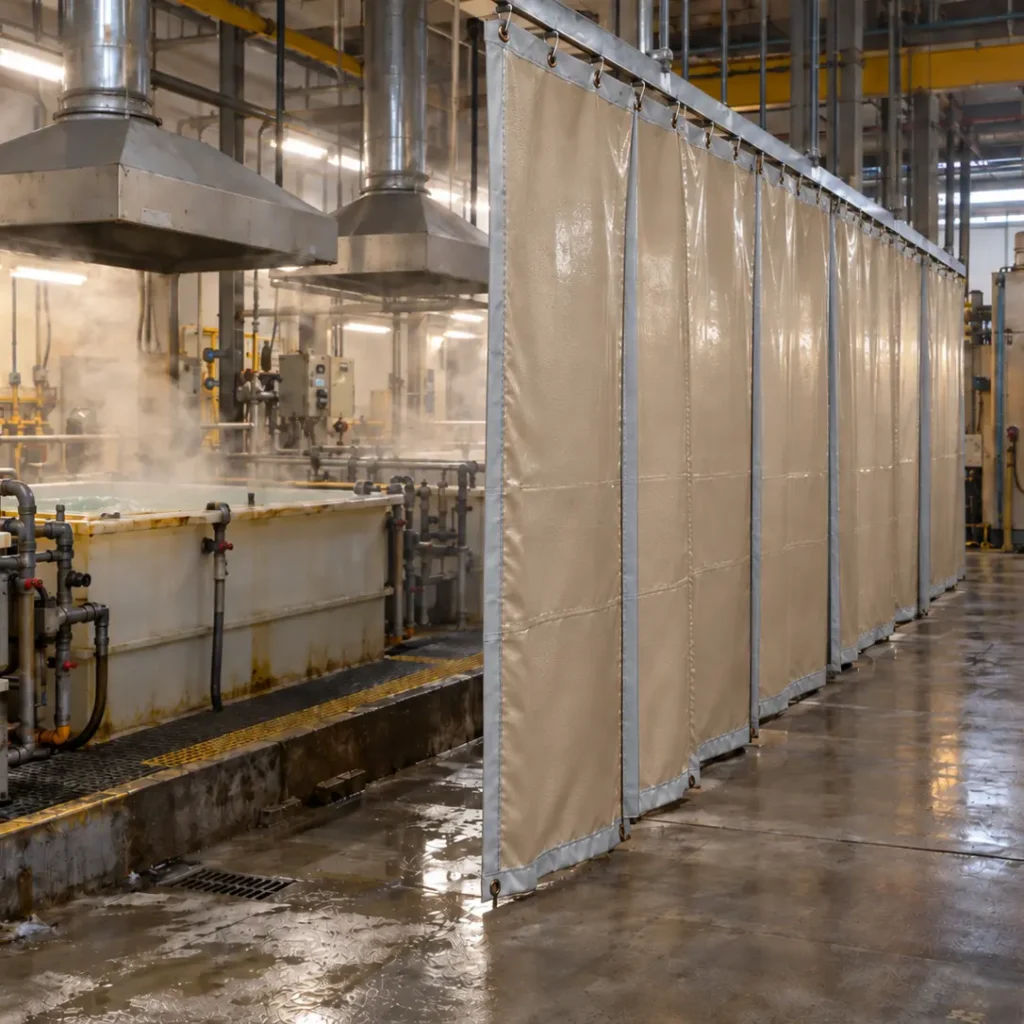
HT-2000 - PTFE Coated Fiberglass Curtain
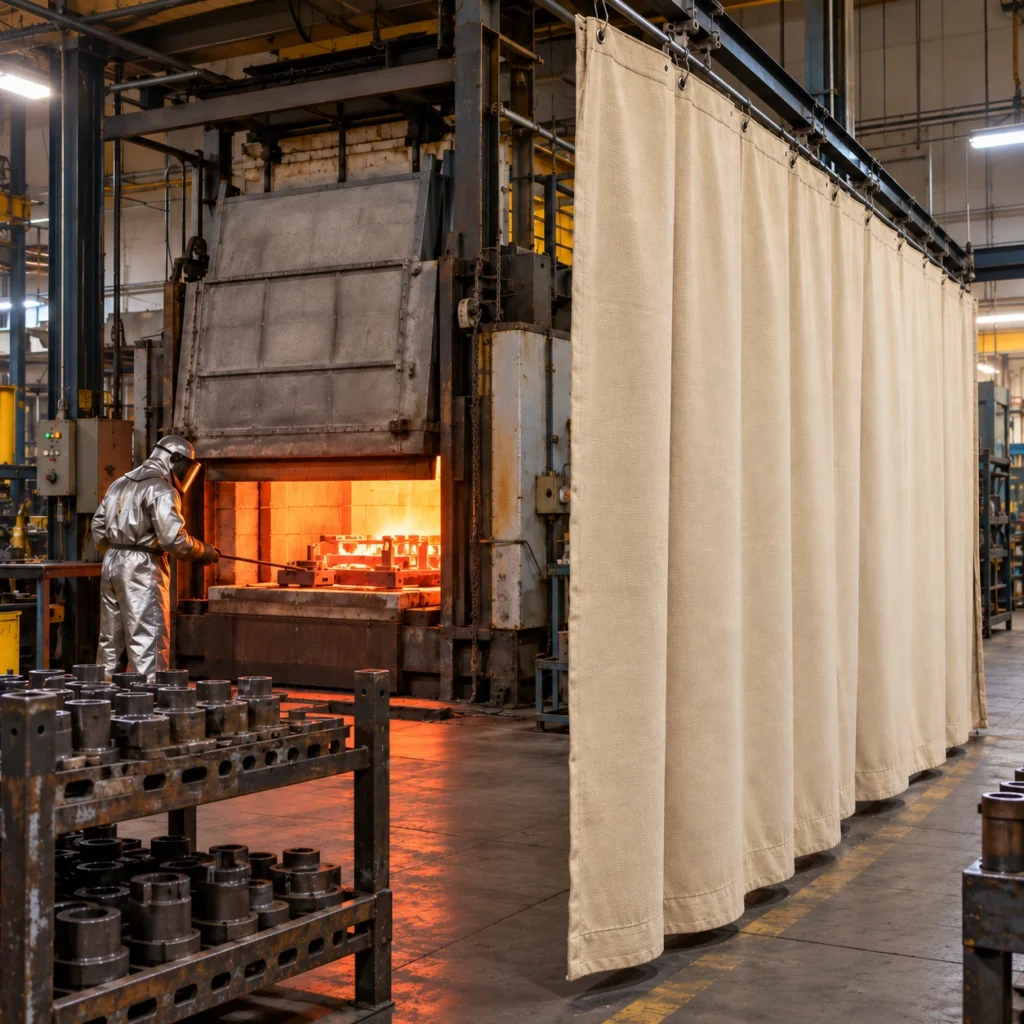
HT-3000 - Silica Cloth High Heat Curtain
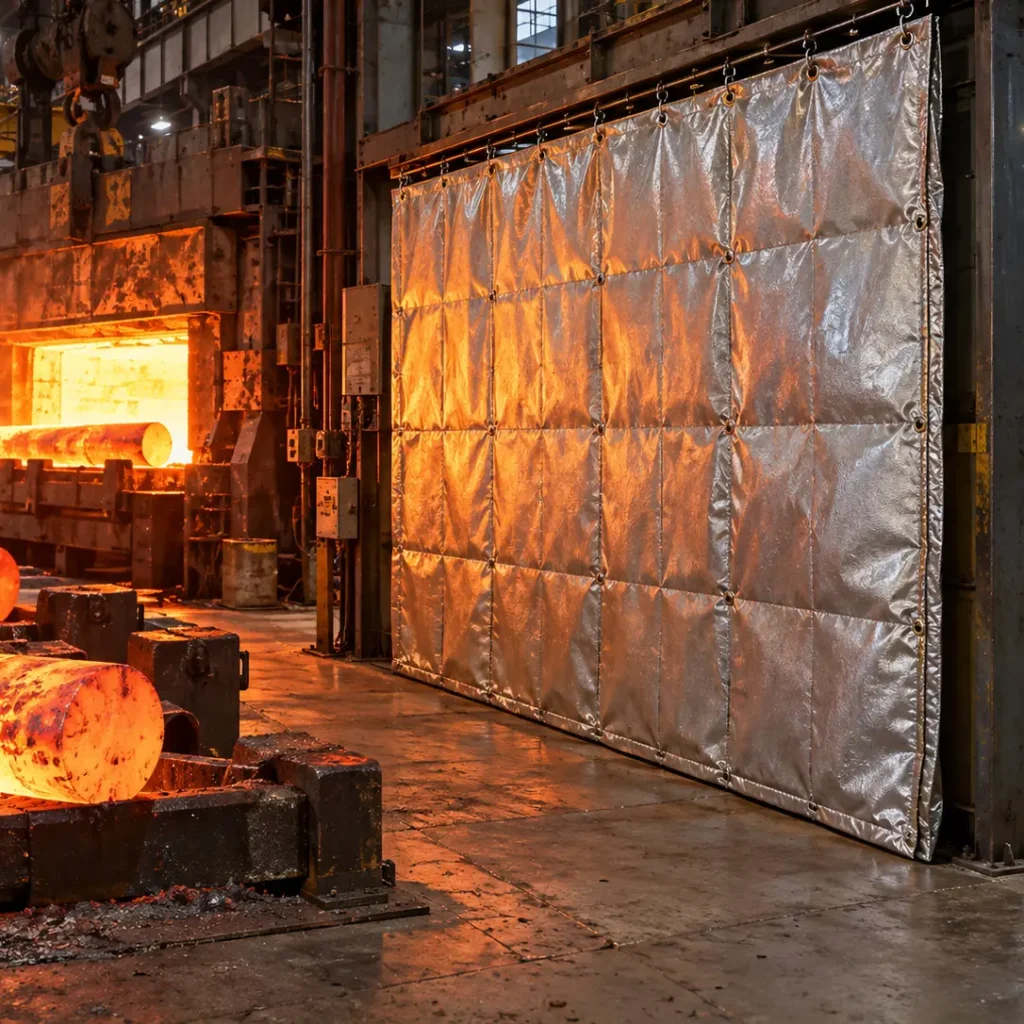
HT-4000 - Aluminum Coated Silica Cloth Curtain
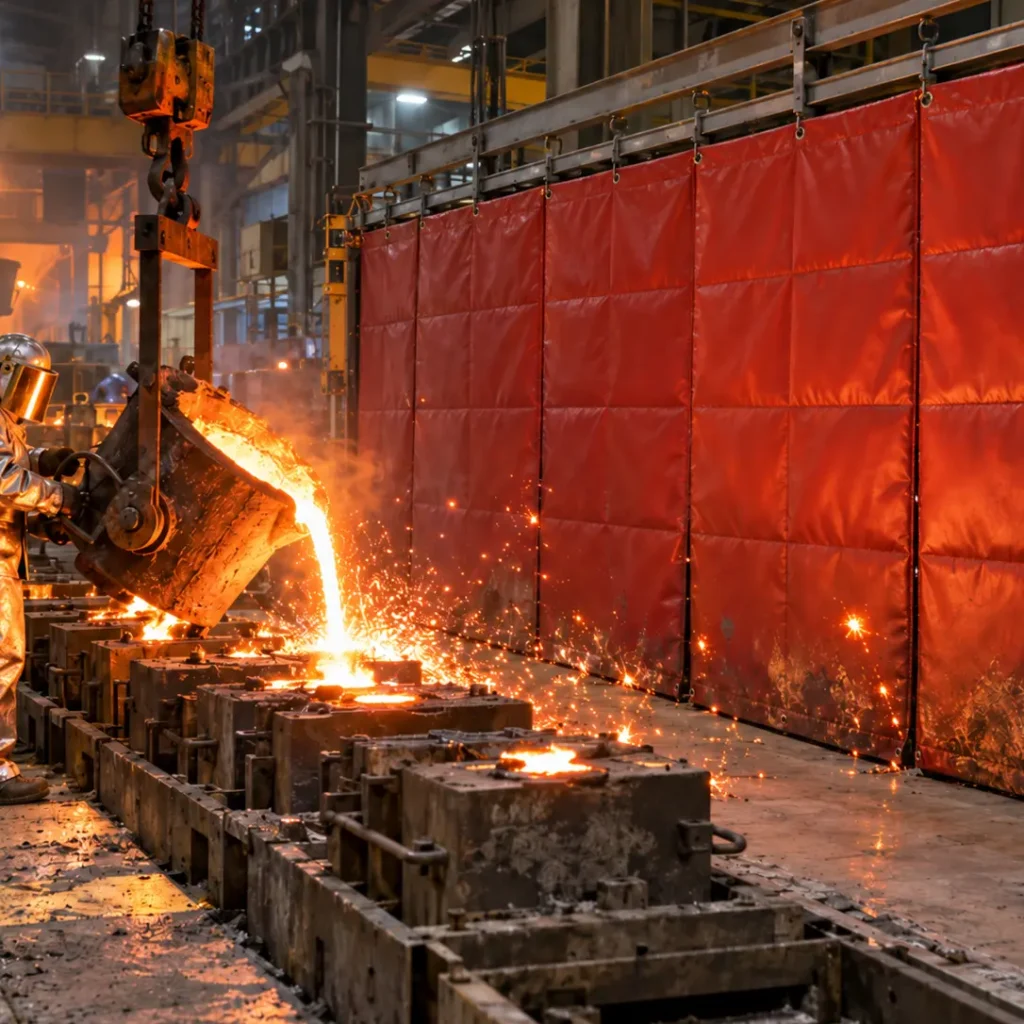
HT-5000 - Silicone Quilted Molten Splash Curtain