IN A WORLD OF SHORTCUTS, WE DON'T™



Welding Fume Collectors
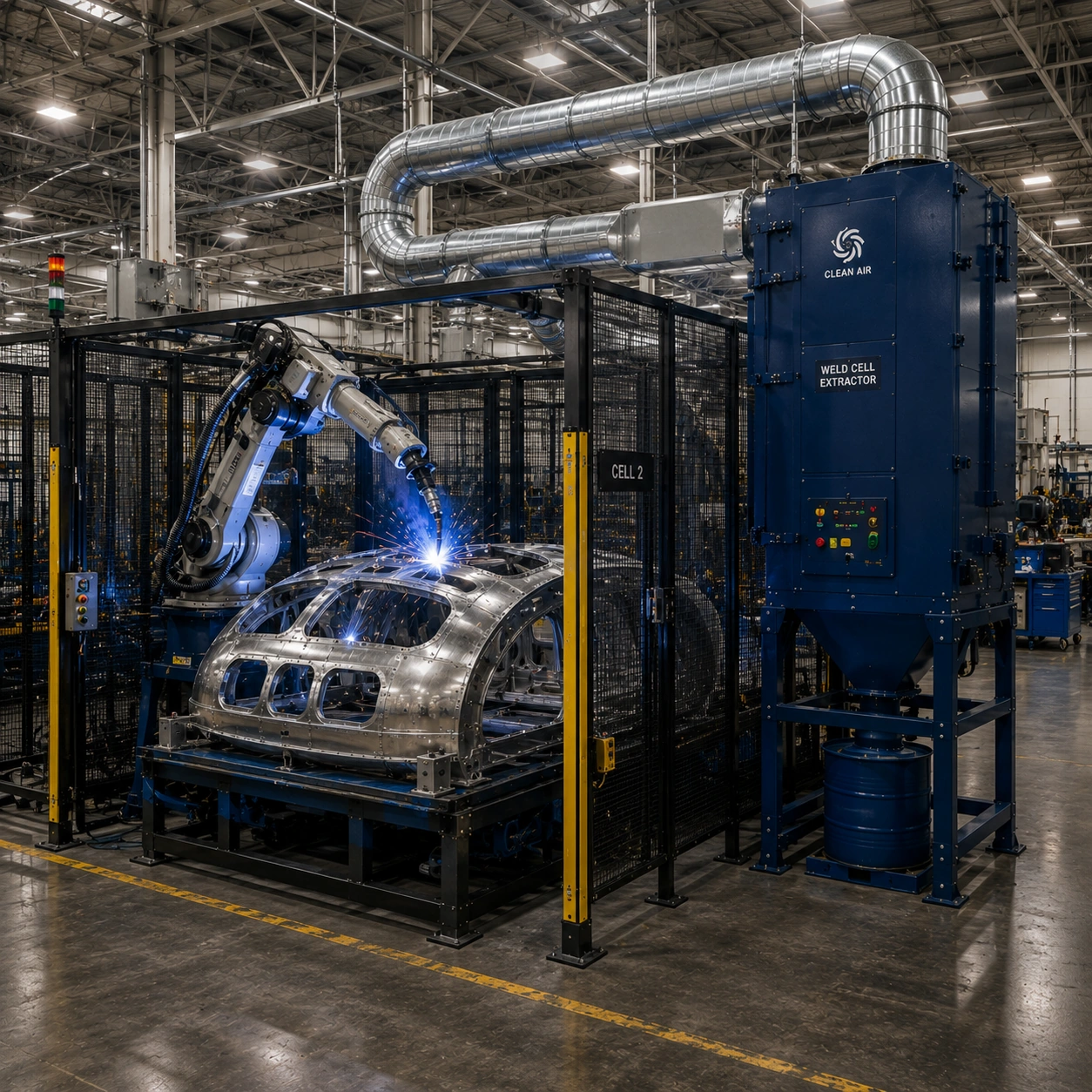

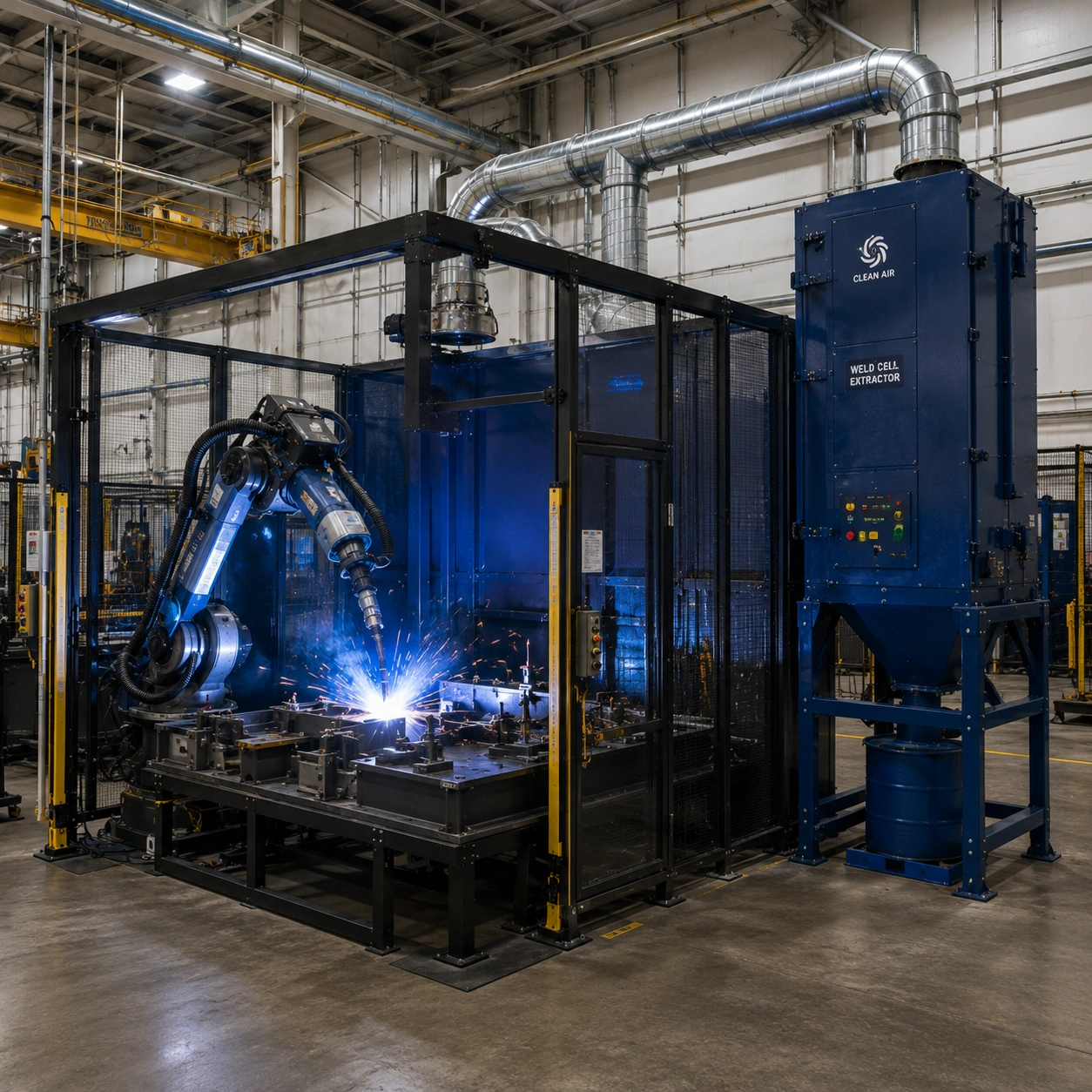


A welding fume collector is the stationary filtration unit that captures and cleans air already pulled from one or more welding stations through ducting — the equipment behind the scenes of a robotic weld cell or multi-station production floor. Amtech AutoVent collectors handle that job at industrial scale, built for continuous operation rather than single-station use. For the full range of enclosure and extraction options, see our Welding Booths & Fume Extraction line.
Sized for Robotic and Multi-Station Weld Cells
These welding fume collectors range from 2,500 CFM up to 10,400 CFM across seven model sizes, so a single robotic cell and a full production floor running multiple stations off one central system can both be sized correctly rather than forced into an undersized off-the-shelf unit. Motor options scale alongside CFM, from 5 HP on the smallest model up to 20 HP on the largest, with standard MERV 11 filtration across the line.
Built for Continuous Production, Not Just Source Capture
Unlike a portable or source-capture device positioned at a single station, a welding fume collector is a central system — ducting pulls contaminated air from multiple points to one unit, where it’s filtered and returned or exhausted. That makes this welding fume collector the right fit for robotic welding cells and automated production lines where fume generation is constant and multiple capture points feed a shared system, rather than facilities where a single welder needs a mobile, repositionable solution.
Hopper and Leg Configuration Options
Units are available with a standard leg set and hopper, or a dust tray configuration depending on how collected particulate needs to be handled and disposed of on your floor. Noise levels run from 76 dBA up to 88 dBA at 5 feet depending on model size and motor configuration — worth factoring into placement decisions on a shared production floor.
Combustible Dust Safety
Welding and metal fume can include combustible particulate, and dust collection systems carry real fire and explosion risk if not designed and maintained with that in mind. NFPA 654 governs the prevention of fire and dust explosions in particulate handling systems like these, and proper installation includes spark mitigation, fire detection, and adherence to local and national electrical and fire codes. Our team can help make sure your installation is specified correctly from the start.
Additional Information:
Meeting Fume Exposure Standards
OSHA’s general industry standard for welding fume exposure is 5 mg/m³, but a growing number of manufacturers are adopting internal limits as low as .02 mg/m³ as they align with international standards ahead of regulatory change. A properly sized central collector is often the only practical way to hit that lower end across a full robotic or multi-station production line — if you’re outfitting individual manual welding stations instead, see our Portable Weld Fume Extractors or our Welding Stations for a self-contained option.
A fume extractor typically captures fumes at the source, often through a mobile arm or hood at a single station. A fume collector is the stationary unit that filters air already pulled to it through ducting from one or more capture points — the equipment behind a ducted or multi-station system rather than the source-capture device itself.
It depends on the number of stations, welding process, and duct run length. Models in this line range from 2,500 to 10,400 CFM — our team can help size the right unit and motor configuration for your specific cell or production line.
Yes, depending on the metals and processes involved. Systems should be designed and installed in accordance with NFPA 654 and local fire codes, with spark mitigation and fire detection built into the overall system design.
It’s built for central, multi-point collection rather than single-station use. For an individual station, see our Portable Weld Fume Extractors or Welding Stations.