IN A WORLD OF SHORTCUTS, WE DON'T™



EV Fire Blanket

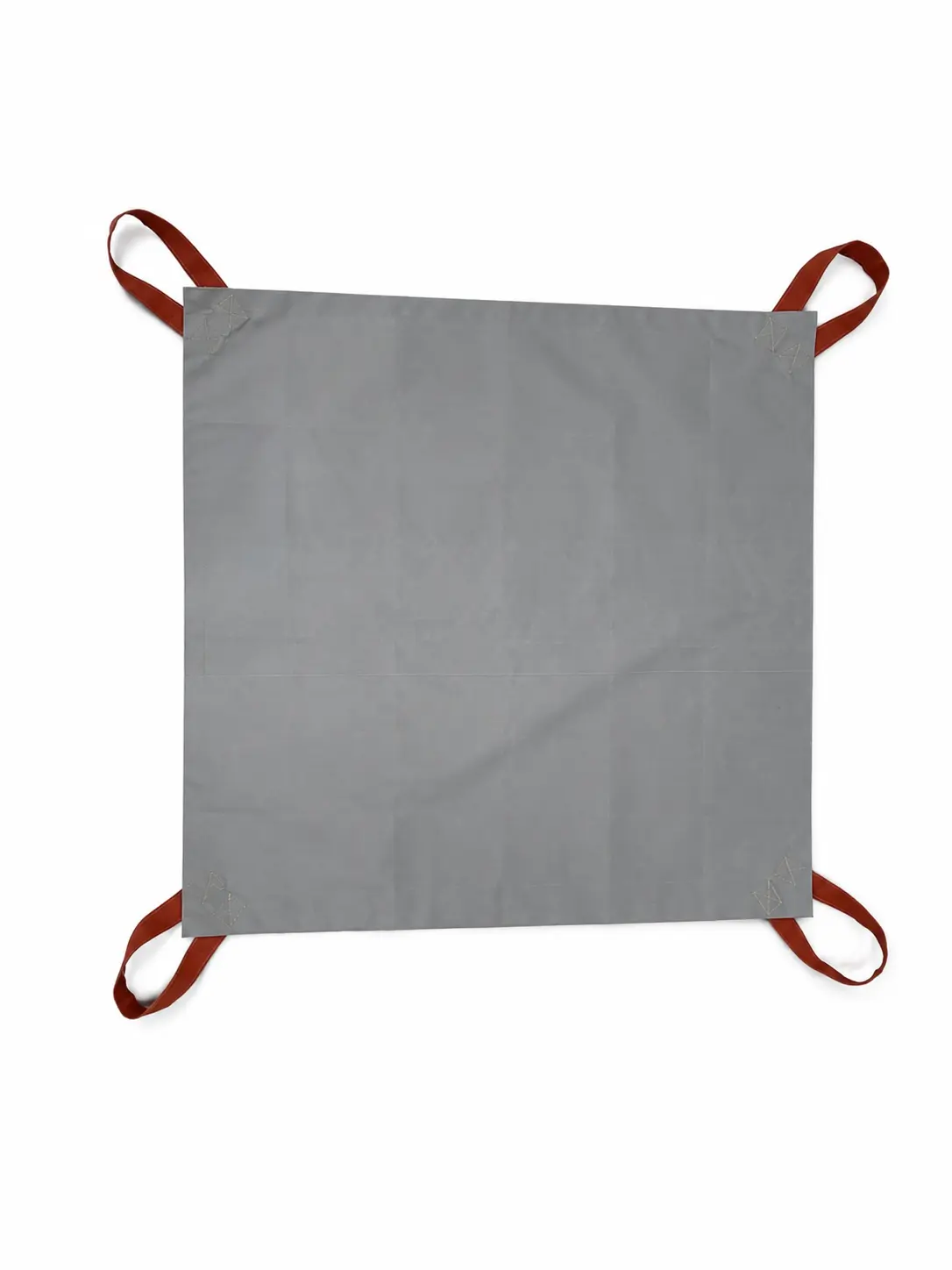


Vehicle Fire Containment — Manufactured in the U.S.A.
An electric vehicle fire behaves nothing like a conventional car fire. A damaged or overheating traction battery enters thermal runaway — a self-sustaining reaction that produces its own oxygen, resists extinguishing agents, releases toxic gas, and can reignite hours or days after the visible flames are gone. Water alone often cannot reach the cells. Containment, not suppression, is what protects the structure and the vehicles around it.
The Steel Guard EV Fire Blanket is built for that job: deployed over the vehicle, it strangles the oxygen supply to the fire, blocks radiant heat from reaching adjacent cars and structure, and controls smoke until responders take over. It is cut and sewn in our South Holland, Illinois plant from Draft-Tex™ fabric, built on Newtex Z-Block® silicone-coated fiberglass, and constructed to the design and test parameters of DIN SPEC 91489:2024-11 — the European technical specification written specifically for electric vehicle fire blankets. Part of our lithium battery fire protection line.
Temperature Performance
This category is full of headline numbers that mean very different things. We publish both figures, clearly labeled, and recommend you ask every supplier for the same two:
- 1,800°F (982°C) continuous — the sustained working rating of the Draft-Tex™ fabric
- 2,700°F intermittent — short-duration flash exposure
- Thermal test basis: benchmarked to the DIN SPEC 91489 cycle — direct flame to 1,832°F (1,000°C), cycling for 23 minutes
A blanket rated only for a momentary peak, or rated below the temperature a lithium-ion fire actually reaches, is not the same product.
Reusable Construction
A large share of the EV blankets sold in the United States are single-use imports: one deployment — a live event, a training exercise, even a false alarm — and a four-figure blanket becomes scrap. Steel Guard blankets are heavy-duty reusable construction. Deploy them in drills, train your responders, inspect them annually, clean off contamination, refold, and return them to service. Only after exposure to an actual fire is a blanket retired, which is true of any lithium-ion fire blanket, because the coating in the contact zone sacrifices itself to protect the fabric beneath. For any organization that trains, that difference compounds quickly. Single-use variants are available on request where a lower-cost consumable is preferred.
Deployment
A twenty-foot blanket is only useful if two people can actually get it over a burning vehicle. Every deployment loop is red for identification in heavy smoke. Corner loops are supplemented with side-edge loops so no grab point is more than about six feet apart, and each loop is a 2-inch reinforced strap on a backed doubler built to a 125 kg (275 lb) shock load. Deployment is a controlled drag: two people take the leading corners and pull the blanket over the vehicle while side crews walk alongside — nobody reaches across the leading edge.
Where These Are Used
Parking structures and garages · EV charging sites · Car dealerships and service facilities · Collision and body shops · Tow, recovery, and salvage operations · Fire departments and first responders · Ferries and vehicle transport · Road tunnels · Airports · Shopping centers and stadium lots · Hotels and hospitals · Fleet depots and municipal facilities
Sizing
The blanket must cover the vehicle completely and lie flat on the ground at least 20 inches (0.5 m) past it on every side — that ground overlap is what starves the fire and blocks radiant heat from reaching the next vehicle. Standard sizes cover passenger cars through full-size trucks, SUVs, and vans. Because we are the manufacturer, we also build to your dimensions — buses, RVs, delivery vehicles, transit equipment, or any application a stock size does not fit.
Manufactured in the U.S.A. — Built to Order
Imported EV blankets are stocked in limited quantities in the United States, with backorders on popular sizes running as long as three months. Because we manufacture domestically, production runs — including fleet, municipal, and distributor quantities — are produced in two to three weeks. There is no container, no customs, and no queue. We also support private label and OEM programs for distributors who want their own branding, which no importer in this category can offer.
Additional Information:
Documentation
Every blanket is serialized and supplied with a product identification record, laminated deployment card, safety and use information, and an inspection and service log — the documentation your customers’ insurers, EHS programs, and fire marshals ask for.
Request a Quote
Tell us the largest vehicle you need to cover, the quantity, and your timeline, and we will size it, quote it, and give you a firm lead time. Contact Steel Guard Safety or call (773) 219-0562.
Looking for other high-temperature materials? See our welding blankets and high heat materials.
Steel Guard fire blankets are constructed to the design and test parameters of DIN SPEC 91489:2024-11. They are not third-party certified to that specification, and we do not represent them as certified, compliant, or approved under it. No equivalent U.S. standard currently exists for these products. This product limits the spread of fire, smoke, and heat; it does not extinguish a lithium-ion battery fire. Always contact emergency services first.
EV Fire Blanket Features
1,800°F (982°C) continuous working temperature; 2,700°F intermittent
Reusable heavy-duty construction — deploy, train, inspect, and return to service
All deployment loops red for identification in heavy smoke
2″ reinforced loops on backed doublers, built to 125 kg (275 lb) shock load
Constructed to DIN SPEC 91489:2024-11 design and test parameters
Effective on both electric and conventional fuel vehicle fires
Custom sizes built to your dimensions
Serialized with full documentation pack included
Cut and sewn in the U.S.A.
Draft-Tex
Body fabric: Draft-Tex™ silicone-coated filament fiberglass, built on Newtex Z-Block® F-407
Coating: Silicone, both sides
Continuous rating: 1,800°F (982°C)
Intermittent rating: 2,700°F
Thread: Kevlar® core with 10-strand 304 stainless steel wrap; stainless melt point 2,732°F
Straps and loops: 32 oz silicone-coated fiberglass, 2-ply folded, 2″ finished width
Radio frequency: RF-permeable — does not block mobile or eCall signal from a covered vehicle
PFAS: No intentionally added PFAS in fabric, straps, or thread

High Heat Reinforced Handles
Deployment loops: four corners plus side-edge loops; no grab point more than approximately 6 ft apart
Loop opening: clears a 150 mm (5.9″) cylinder for gloved-hand access
Loop attachment: box-X stitched over full tail footprint onto reinforced doubler
Load rating: 125 kg (275 lb) shock load per DIN SPEC 91489 clause 7.3 protocol
Storage: wheeled storage box standard on full-vehicle sizes; doubles as the deployment cart
Optional: wall-mounted station case with mounting hardware for fixed charging-bay installation
Optional: waterproof carry bag with backpack straps for response vehicles
No. A lithium-ion traction battery in thermal runaway generates its own oxygen and can continue burning beneath the blanket. The blanket contains the event — stopping fire spread, blocking radiant heat, and controlling smoke until the cells burn out or responders can cool them. Always contact emergency services first.
Yes. In normal service — drills, training, inspection, and handling — it is cleaned and returned to service throughout its life. It is retired only after exposure to an actual fire. Many EV blankets sold in the U.S. are single-use, so confirm before comparing products.
1,800°F (982°C) continuous and 2,700°F intermittent, with construction benchmarked to the DIN SPEC 91489 thermal cycle of up to 1,832°F (1,000°C) for 23 minutes. Ask any supplier for both a continuous rating and a test duration.
Yes. We are the manufacturer — buses, RVs, delivery vehicles, and specialty applications are built to your dimensions in two to three weeks.
Yes. The blanket contains conventional vehicle fires as well; it is specified around lithium-ion because that is the harder problem.
We support stocking distributors with volume pricing, drop shipping, and literature, and we offer private label and OEM programs with your branding.
Coverage rule: the blanket must cover the vehicle completely and lie flat on the ground at least 20 in (0.5 m) beyond it on all sides.
Passenger cars, sedans, and compact SUVs — standard passenger size
Full-size SUVs, pickups, electric trucks, and vans — extended size
Buses, RVs, delivery and transit vehicles — custom, built to your dimensions
To size: measure the largest vehicle you expect to cover, add approximately 40 inches to each dimension, and round up. For mixed public traffic, size up.
Dimensional tolerance: ±2% of specified finished size
Parking structures and garages
EV charging sites and charging depots
Car dealerships and service facilities
Collision and body shops
Tow, recovery, and salvage operations
Fire departments and first responders
Ferries and vehicle transport vessels
Road tunnels
Airports and transit facilities
Shopping centers and stadium lots
Hotels and hospitals
Fleet depots and municipal facilities